
What I've Changed My Mind About as a Nutritional Therapist
I've been a nutritional therapist for more than 13 years now, if there's one thing I can say with certainty, it’s that:
The nutritional therapy I practise today looks very different from the nutritional therapy I practised when I first started, and I'm glad it does.
Over that time, the evidence has evolved, new tools and approaches have emerged, and I've learned a huge amount from working with clients. My practice has evolved alongside all of that.
That isn't because I didn't know what I was doing. It's because I've kept learning!
As part of my professional memberships and registrations, I have to complete a certain amount of continuing professional development (CPD). However, keeping up to date isn't something I do simply because I have to tick a box.
I love learning! Especially in an area I’m passionate about.
There’s always new research and training. I explore new tools and approaches. I look at emerging evidence around nutrition, lifestyle and supplementation.
Sometimes that new information confirms what I already knew.
Sometimes it adds another layer of understanding.
And sometimes it makes me stop and think, and change my mind and approach.
That’s a good thing.
Nutrition isn't a finished science. Evidence evolves. Our understanding changes. New tools become available. Some ideas that were once widely promoted become outdated or turn out to be much more nuanced than we originally thought.
And then there's another kind of learning that only comes from experience.
Working with real people.
Over 16 years of student and clinical practice, I've learned an enormous amount from watching what happens when people actually try to put health advice into practice.
Here are a few things that have changed.
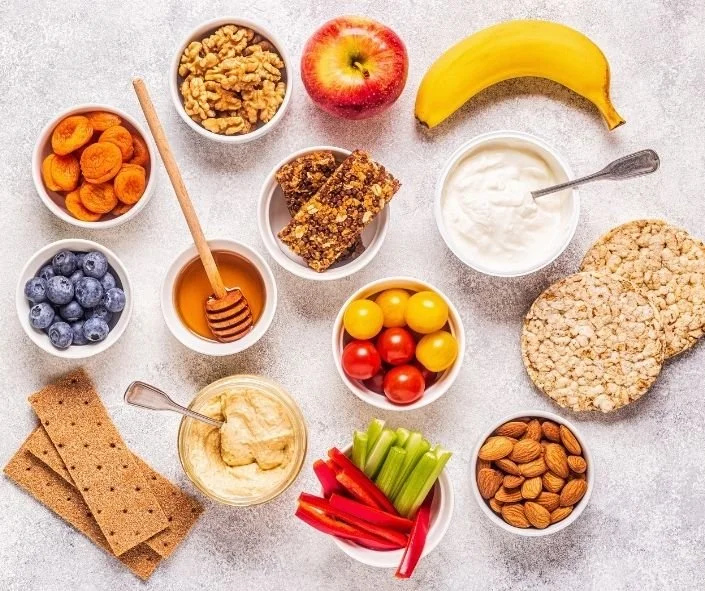
1. You don't need to eat every 2–3 hours to "keep your metabolism going"
The idea was that eating regularly would keep your metabolism "fired up", prevent your blood sugar from dropping and stop you from becoming overly hungry.
It sounds logical, but now we know that your metabolism doesn't simply switch off because you haven't eaten for a few hours.
And for many of us trying to lose weight, eating every couple of hours can actually make things harder.
Not only does constantly eating creates more opportunities to consume energy and can make it harder to recognise genuine hunger; it can also keep our bodies in a “fed” state for longer. In this fed state, insulin levels can be raised for longer and more ofen, which doesn’t allow you bodies to release fat.
For some people, creating proper space between meals works much better overall.
It allows them to experience hunger and satiety more clearly, reduces the constant focus on food and can make eating feel much less complicated.
Sometimes less eating can mean less food noise (without the expense and side effects of GLP1 medications).

2. More information doesn't necessarily mean more value
This has been the biggest shift since my student days. When I first started working with people, I wanted to give them EVERYTHING: The nutrition information. The meal ideas. The supplement recommendations. The lifestyle strategies.
I thought I was giving great value!
But I've learned that information and transformation are two very different things.
A client can leave a consultation with ten brilliant strategies and implement none of them. Too much can feel overwhelming, unachievable, and each action can seem forgettable
Or they can leave with one simple change that they actually manage to incorporate into their life over the next week and come back ready to move to the next step. Over a longer period all these compound and become part of who they are.
That's when I really started to appreciate that clients weren’t just coming to me for information. They wanted to coaching, the support to implement changes in an accountable way.
My programmes have become longer and more spacious as a result, and I often find myself pacing clients through their programmes. We'll identify a starting point, implement it, give it time to become familiar.
Then we'll build from there.

3. More change doesn't mean faster results
This is another lesson I've learned by watching clients get excited, and I completely understand it: You've finally decided you're going to make some changes, so you want to make ALL the changes.
The new meal plan.
The gym five times a week.
10,000 steps every day.
Two litres of water.
No alcohol.
Early nights.
Meditation.
All the supplements.
Meal prep.
A morning routine.
And perhaps a cold plunge for good measure.
It feels fantastic at first!
There's novelty. Excitement. Motivation. A feeling that this time is going to be different.
But then... real life happens.
Work gets busy.
The kids need you.
You don't sleep well.
You go away for the weekend.
You miss a workout.
You don't prep your meals.
And suddenly the elaborate plan you've created becomes impossible to maintain.
It's not just the habits that disappear. Confidence can disappear with them.
When perhaps the plan was simply asking too much of you at once
I've become much more interested in helping clients make changes that meet them at where they are at now.
Let a change become part of your life. Let you and your life ingrain it until it starts to feel normal. Then build on it.
That's not as sexy as the movie montage where someone transforms their entire life in 90 seconds.
But it works.

4. I changed my mind about CGMs
When Continuous Glucose Monitors became available for us practitioners to use with non-diabetic clients, I was curious but very cautious about them.
For a client with a long history of weight loss dieting (like myself) I worried that another device, another number and another thing to monitor could simply become another source of stress and anxiety.
And for some people, I still think that's absolutely a valid concern.
But I've changed my approach.
I've discovered that, for the right person and used temporarily, a CGM can be an incredibly powerful learning tool that supports the strategies we put in place.
Instead of telling someone what their body should be doing, we can actually see what happens.
What happens when they change their breakfast? What difference does a walk after dinner make?
The CGM becomes less about chasing a perfect number and more about curiosity.
It's data we can use to understand the person sitting in front of us.
And that shift, from monitoring to learning, is what changed my mind.
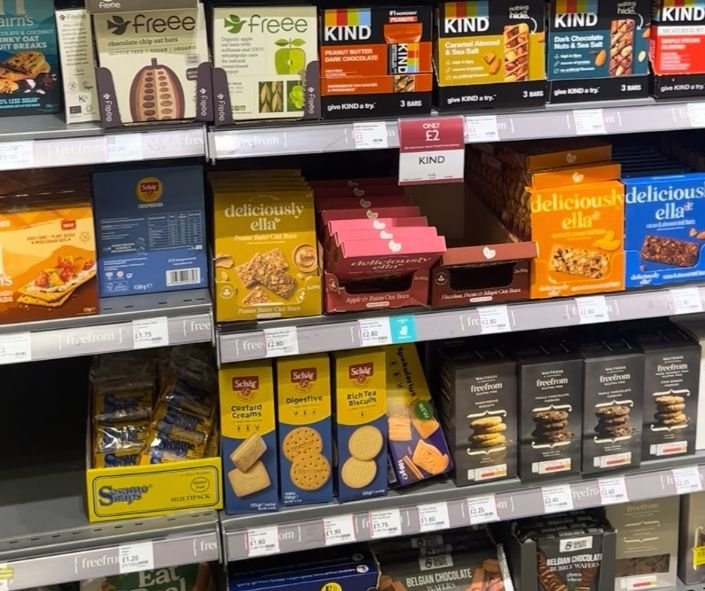
5. Gluten-free doesn't automatically mean healthier
There was a time when taking gluten out of someone's diet on a temporary basis (for a variety of reasons) meant they naturally started looking at completely different foods. Instead of wheat-based bread, pasta and cereals, we might use quinoa, buckwheat, oats where appropriate, rice, root vegetables or other naturally gluten-free whole foods.
That usually had an unintended benefit: the replacement foods themselves often brought more nutritional value.
But the gluten-free market has exploded. Now you can walk into almost any supermarket and find gluten-free versions of bread, biscuits, cakes, crackers, cereals, wraps and pasta.
One of the fundamental things I was taught during my studies was whatever foods you remove, you have to replace those nutrients. I've become much more thoughtful and emphatic about what replaces gluten-containing foods (when needed), rather than enabling clients to focus on just removing gluten.

6. I became much more cautious about food intolerance testing
Food intolerance testing is another area where my thinking has changed considerably. In the early days, IgG intolerance testing could be a seemingly straight forward way of identifying any foods triggering a variety of symptoms. And this always felt like a win for clients. In fact it was the most requested test from clients for a while.
However, I found that some clients would come back with a surprisingly long list of foods they were supposedly reacting to, many of which were foods they ate regularly. Sometimes the bigger picture suggested that we were looking at a gut environment that needed support, rather than a collection of completely unrelated "problem foods".
As I found this more and more often, I now only use this type of testing in the right context, and sometimes this may mean steering clients away from this when they ask. If we've already worked on the foundations and addressed potential underlying contributors to inflammation or gut health, and there's still a particular food (or group of foods) that we suspect may be problematic, then this type of testing can provide useful information.
I've become much more conscious of the risk of creating unnecessary restriction.
This is especially relevant for someone who has already spent years trying to work out what they can and can't eat, another long list of "bad foods" isn't necessarily helpful.

7. The "best" health plan isn't necessarily the most impressive one
Social media has given us access to an incredible amount of health information.
But it's also created a strange new form of health anxiety. There is always something else you could be doing.
More protein, more steps, strength training, cold plunges, red light therapy, fasting, sleep tracking, all the biohacks, and all the things you should be worries about…
Even as a nutritional therapist, I can find it overwhelming sometimes.
And if someone who works in this industry can feel overwhelmed by the sheer volume of information, imagine how it feels when you're simply trying to work out what the hell you're supposed to eat for dinner.
I've become much less interested in giving people the most impressive health plan.
I'm interested in finding the most realistic one.
The one that works with your job, your family, your lifestyle, your preferences, and most importantly – your starting point.
The theoretically perfect plan that you can't maintain is far less useful than a pretty ordinary plan that you can stick with.
The longer I work in nutrition, the less interested I am in simple answers.
Not because nutrition has to be complicated—but because people aren't simple.
The same strategy can be incredibly useful for one person and completely inappropriate for another.
A food can be problematic in one context and perfectly fine in another.
A supplement can be useful when there's a specific reason for using it, but unnecessary when there isn't.
And sometimes the best intervention isn't adding another strategy at all.
It's taking something away. The noise. The pressure. The unnecessary restrictions. The expectation to do everything at once.
And perhaps most importantly, I've learned that changing your mind isn't a sign that you don't know enough.
It's a sign that you're still learning.
So if I change my mind again in another five years?
I hope I do.
Because that will mean I'm still curious, still questioning, still learning—and still putting what I learn into practice.