
When Your Body Starts Whispering, Listen Before It Shouts: Why Recovery Matters for Your Health
I've been quiet online recently. Full disclosure: I've been exhausted.
Not just "I need an early night" tired, but mentally and physically depleted in a way that's completely unfamiliar to me. As someone who thrives on movement for my mental health and needs to feel productive, this has been beyond frustrating.
We all have our own version of "normal". Even if that normal isn't actually healthy, we know when something feels different. We know what we can tolerate, and when our body is asking us to pay attention.
As I work with my GP, and with myself as a nutritional therapy client, there are some significant changes I'm making right now.
I've always been someone who pushes myself physically and mentally, and it's something I've been proud of. It's become part of my identity. Seven years of martial arts in a heavily male-dominated environment certainly reinforced that mindset.
Being resilient has served me well in many areas of my life. But resilience without recovery isn't sustainable.

Whilst that drive can be a positive trait, it can also work against me, and I have no doubt that many others experience a similar pattern...
I ignore the whispers until my body has to shout.
The whispers tell me to slow down.
To recover.
To rest.
Instead, I keep pushing.
Eventually, the whispers become louder.
A niggle becomes an injury.
Tiredness becomes illness or exhaustion.
My body shouts, and suddenly the decision to stop is no longer mine.
When I look back, it's a cycle I've been repeating for years—and obviously a lesson I've yet to fully learn!
Yes, I eat a nutrient-rich diet, I work out regularly, and I've made significant lifestyle changes over the last twenty years. I've built a career supporting others with their health goals, so this depletion initially felt like failure.
Of course, I never claim to be perfect. But one area I've always struggled with is stress management and creating genuine mental downtime.
I've come to realise that I thrive on being busy. And I know many women who are exactly the same. Whether it's habit, upbringing, personality, a neurochemical balance or something else, what I do know is that constantly being "on" isn't serving my wellbeing, long-term health or life goals.

So what next?
You don't have to be a fitness expert to understand the concept of muscle recovery.
During a workout, our muscle fibres experience tiny amounts of damage. It's only afterwards, during a period of recovery, that they repair and adapt, allowing us to become stronger.
Without enough quality recovery, we never achieve the strength, performance or progress we're capable of.
So why don't we apply this same principle to the rest of our health?
We understand that muscles don't become stronger during the workout—they become stronger during recovery. Yet somehow we expect our minds, hormones and nervous systems to cope with constant stimulation without the same opportunity to recover.

For many of us, even if we don't think our lives are particularly stressful, we're exposed to constant overstimulation from work, family life, notifications, phones, television and endless to-do lists. Even when we're exhausted, some of us fall into "revenge bedtime procrastination"—staying awake later than we should to reclaim some sense of control over our limited free time.
Mental recovery is just as essential to our health and wellbeing as physical recovery. Our nervous system, brain and hormones need it to function well.
So what does recovery actually look like?
Whilst spas, holidays and massages can be wonderful ways to unwind, recovery doesn't need to be expensive, luxurious or time-consuming. In fact, the most effective recovery habits are often the small ones we can repeat consistently.
Recovery can simply be creating moments where your body feels safe and your nervous system has the opportunity to regulate.
This becomes even more important during perimenopause, when changes in our hormones can make us more sensitive to stress and its knock-on effects throughout the body. If you're struggling with low energy, weight loss, poor sleep or your mental wellbeing, prioritising recovery isn't a luxury—it's an essential part of supporting your health.
Physical recovery
Walking outdoors
Morning sunlight
Gentle yoga or stretching
Strength training with adequate recovery between sessions
Hydration
Eating meals that support blood sugar balance
Prioritising quality sleep

Mental recovery
Reading
Journalling
Meditation or breathwork
Leaving gaps in your diary
Saying "no" more often
Emotional recovery
Asking for help and support
Lowering unrealistic expectations (accepting that this season is temporary)
Letting go of guilt around rest
Sensory recovery
Spending time in nature
Listening to birdsong
Gardening
Reducing background noise and evening TV
Scrolling less and being more present
Recovery isn't a reward you earn once everything else is done.
It's one of the habits that makes good health possible.
Without these small moments of recovery, your body may eventually demand a much longer period of rest. That's never a step backwards—it's your body creating the conditions it needs to heal.
So this July, I'm making recovery my project.
Not because I've given up.
Quite the opposite.
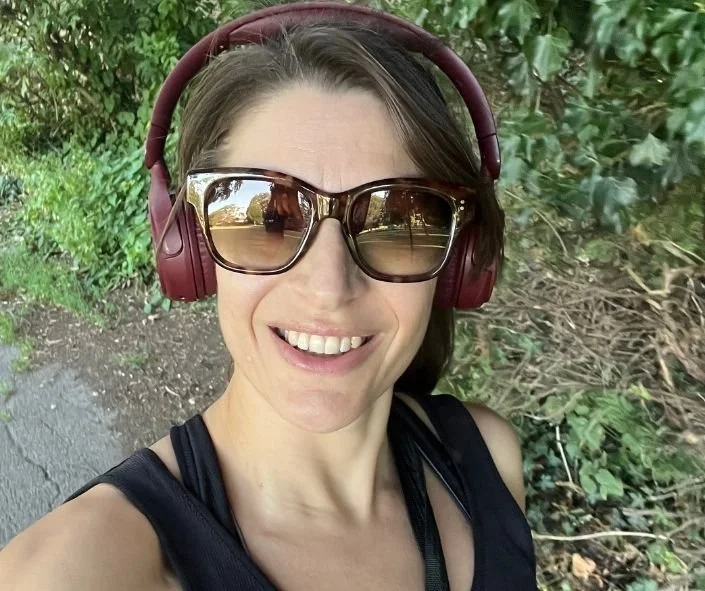
I'm creating the conditions my body needs to heal, adapt and become stronger.
I'm treating my whole body the same way I'd treat recovering muscles after a workout: giving it the nourishment, movement, rest and care it needs to rebuild.
Perhaps this time, instead of waiting for my body to shout, I'll learn to listen while it's still whispering.
Maybe that's been the lesson all along.
How well are you listening to your body's whispers?
If you've been feeling permanently tired, struggling with stress, finding weight loss harder than it used to be, or simply feeling like you're running on empty, it might not be another supplement or stricter routine that you need.
Sometimes, the most powerful next step is creating more opportunities for recovery.
If you'd like support in understanding what your body is trying to tell you—and building a healthier, more sustainable way forward—I would love to help.