
What 14 Days of Wearing a CGM taught me as a Nutritional Therapist of almost 14 years….
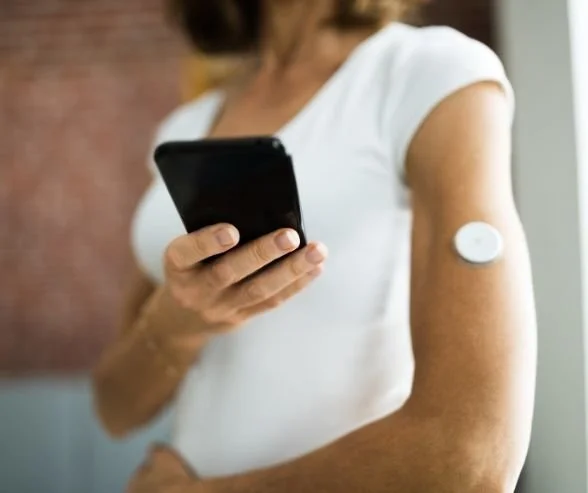
It’s not that uncommon these days to find people wandering around with a little grey or blue disc attached to their upper arm. Once used by diabetics, more and more of the non-diabetic population are checking them out as a way to manage their blood sugar.
In the last few years, it’s been great to see blood sugar talked about online and in more mainstream discussions. I remember starting to learn about this in my first nutritional therapy lectures 20 years ago. In my practice, it has remained one of the most foundational strategies I work with clients, especially for weight loss, boosting energy and balancing hormones. For women in perimenopause balancing blood sugar becomes even more important as our hormonal disruption makes this a little trickier.
In fact, when I first started qualified, my friends and family who kindly listened to me practicing presentations, knew my blood sugar explanations off by heart!
So, whilst there has naturally been more knowledge I’ve gained over the years, this is a subject I’ve been confident with.
Of course, I have specific steps and protocols that I use for clients to improve their blood sugar control; as for myself? I felt this was already locked down.
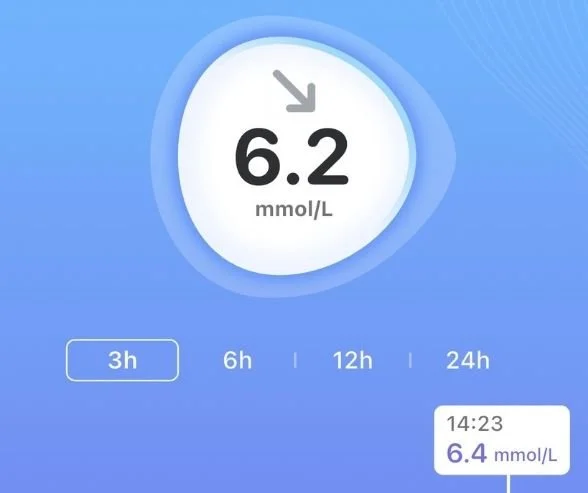
So when I was starting to put together some new packages recently, I had an opportunity to try out a continuous glucose monitor (CGM) for myself. I was curious, and so I wore one for the standard 14 days.
What happened at the end of 14 days?
I lost 1.4 kg and my waist shrank. My energy was different too.
Yes, that’s all very positive, and reinforces how effective this can be; but what the hell?! I’ve always taken pride in practicing what I preach and had this all locked down, surely?!
Apparently not! Despite talking about this repeatedly, guiding clients through step-by-step processes to improve their blood sugar control – I’d got seriously complacent for myself. More sweet treats and larger carbohydrate portions had crept in over the last couple of years. Not to mention the added challenges of entering perimenopause, significant bouts of stress and poor stress management; they all took their toll! If I’m fully honest, I had been falling out of love with the body I’m in.
When I attached the monitor, I immediately started to feel more accountable to myself. I was more conscious of the types of foods I was eating in each meal, the order of eating, portion sizes and my daily movement outside of exercise. All in a really empowering and positive way. Evidently that has had such an impact on me, and I’m keeping it going.

Moving forward, I’m recognising that perimenopause means that getting a better handle on my blood sugar is even more important than before. I’m making a conscious effort to reduce my carbohydrate amounts, to increase my (non-exercise) daily movement and proactively manage my stress much better.
Above all, I’ve learned that it’s so easy to get complacent with a “healthy diet and lifestyle”. Our self-perception doesn’t always keep up when our habits gradually change. In the same way I encourage my clients to check in monthly for accountability and a mini audit, I have to do the same for myself if I want to reach and maintain my body and health goals.
Even when you feel confident that your diet is pretty healthy – if you’re not reaching your goals, the likelihood is that there are some tweaks that can be made.
Curious about what your own blood sugar could be telling you?
My Body Confidence Blood Sugar Toolkits give you the knowledge, practical strategies and support to understand your blood sugar and make changes that work for your body — with the option to add a CGM and discover even more.