
Is Your Home Supporting Your Health and Body Goals?
Towards the end of last year I read The Calm and Happy Home by Kimberley Gallagher, and it gave me such an unexpected mental lift. It helped me to reconnect with my space – not just in the sense of tidying and decluttering, but it helped me to align my environment with how I want to feel and the goals I’m working towards.
We all know that clutter increases stress; but what really struck me is how subtle environmental factors influence our motivation, our nervous system, and even our body goals. Once you see it, you can start making small, meaningful changes in each room that genuinely support you instead of working against you.
Before we delve deeper, it’s worth acknowledging that not all clutter is physical, eg. overstuffed drawers, surfaces that never feel clear; but emotional clutter can include items that are attached to an older version of you, or an iteration of you that you’re trying to move away from.
Often, emotional clutter weighs more heavily on our stress levels than the objects themselves. Clearing one often clears the other.
One of the most powerful mindset shifts I’ve made is walking through my home with this simple question:
“Does this space make it easier or harder for me to be the version of myself I’m working toward?”
And when it comes to decluttering (especially wardrobes) you can ask yourself: “Is this something that the person I’m becoming would use or wear?”
With that in mind, you can move around your home, room by room and explore some shifts that can support your health.

Bedroom: Your Sanctuary for Rest and Recovery
Your bedroom is where your body does essential repair work that comes with good quality sleep: deep rest, hormone regulation, muscle recovery, nervous-system repair. Poor quality sleep can lead to low energy, poor blood sugar control and stress management and poorly controlled appetite and difficulty maintaining or losing weight. So protecting this space matters.
Changes to consider:
Move TVs and laptops out of the room if possible – keep your room as a calming place.
Use blackout curtains or eye masks to block light and support essential melatonin production for sleep.
Have soft, low lighting available in the evenings to help your body wind down.
Create a bedtime ritual you look forward to. If sleep procrastination is an issue (not going to bed once you’re tired because you’re adamant to make the most of your down time) then this can be a real game changer.
My own wind-down setup: silk pillowcases to give me a sense of luxury, Himalayan salt lamps on my bedside tables, and a good book that I look forward to reading.
It sounds simple, but making this space feel warm, calm, and inviting has changed my evenings completely.

Bathroom: A Detox Check-In
The bathroom often becomes a graveyard of half-used products, forgotten samples, and skincare with ingredients we’ve never actually read.
Some cosmetic ingredients have been linked to hormone-disrupting effects and can add pressure to your detoxification pathways. A bathroom declutter is a good opportunity to simplify, refresh, and make more conscious choices.
Changes to consider:
Go through cupboards and discard anything expired.
Choose products with fewer questionable ingredients where possible.
Streamline your routine: keep only what you use and love.
Use baskets or drawer organisers to reduce visual clutter.
This is a key step in reducing your daily toxic load. As I’ve mentioned in previous blogs, impaired detoxification can impact energy levels and weight loss efforts.
Lounge & Dining Areas: Mindful Eating, Work and Rest
If you don’t have a designated dining room, creating even a modest eating space can make a huge difference. Mindful eating is linked to better digestion, improved nutrient absorption, healthier portion awareness, and reduced emotional eating.
Changes to consider:
Clear and designate one area for eating, even if it serves multiple purposes.
If your table doubles as a workspace, try a very simple “reset ritual” between work and meals. For example, move work items off the table once you switch to dining mode.
Keep your lounge reflective of how you want to relax: softer lighting, blankets, fewer piles.
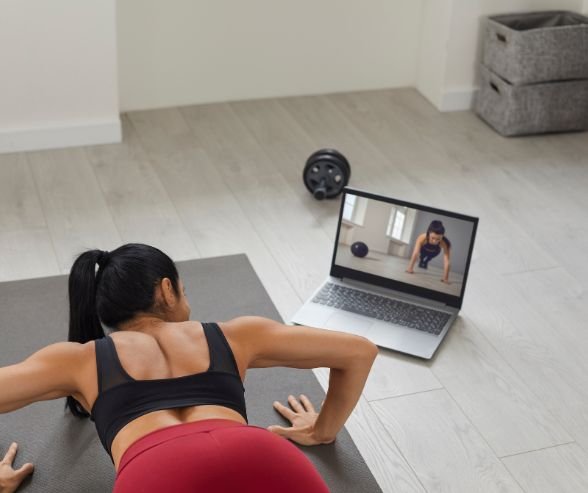
If you work out in this space, maintain a clear floor area to remove friction to exercising.
When a space is set up for the thing you want to do, you’re far more likely to do it!

Kitchen: Your Healthy Habits
Naturally, as the place you prepare your food, the kitchen probably has the most direct influence on your health goals. It’s also the room that can benefit the most from a declutter.
Changes to consider:
Remove anything out of date or long forgotten (including herbs and spices that have lost their flavour).
Keep a clear fridge and freezer inventory to reduce waste and make meal prep smoother.
Place healthy staples at eye level.
Sell or donate any gadgets that you don’t use and take up space.
Throw out old Tupperware and start replacing plastic containers (with hormone disrupting phalates and BPAs) with glass, pyrex or ceramic storage.
A clearer kitchen makes healthy eating easier, more consistent, and far less stressful.
And for further support with making healthy meal prep easier, get your free healthy meal prep guide here.
Bringing It All Together
When your environment becomes aligned with your goals and wellbeing, things become that little bit easier: your workouts, your meal prep, your sleep, your motivation, your mood.
Adopting these changes, step by step, allows you to adapt your home in gradual and meaningful ways that match your goals and the person you want to become.